
NorthEastConnect
National Parks & Wildlife

Wildlife Sanctuaries & National Parks

Discover Kaziranga, Manas, Dibru-Saikhowa and the incredible biodiversity of Northeast India

4 Sanctuaries
Eaglenest Wildlife SanctuaryNovember to April (dry season; peak birding March-April)

Eaglenest Wildlife Sanctuary

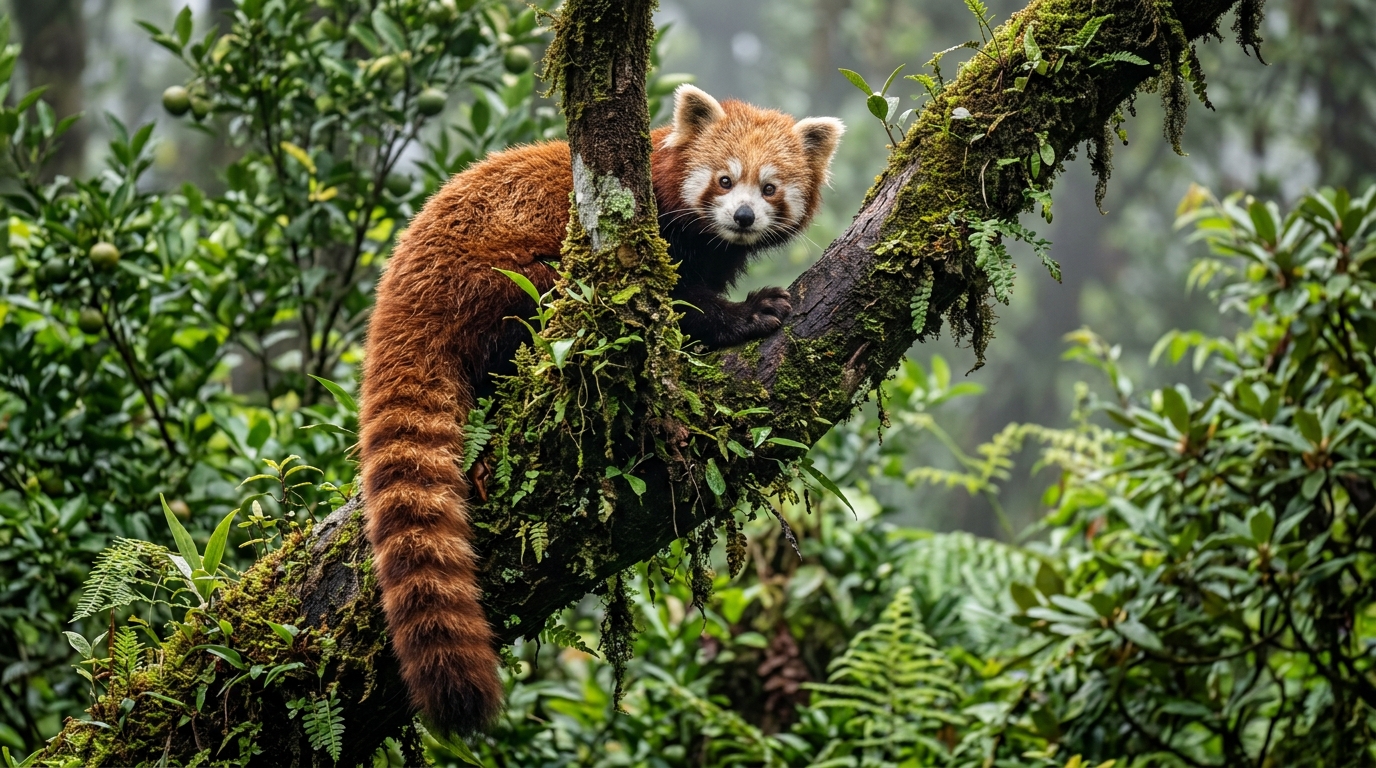
Eaglenest Wildlife Sanctuary, in Arunachal Pradesh's West Kameng district, covers 217 sq km and is widely regarded as one of the finest birdwatching destinations anywhere in Asia. Its reputation rests on more than 450 recorded bird species packed into a compact area spanning a dramatic elevational gradient, from subtropical forest in the lower reaches up through temperate broadleaf forest to high-altitude rhododendron and conifer forest near the Eaglenest Pass. The sanctuary's single most famous resident is the Bugun liocichla, a strikingly coloured babbler that was entirely unknown to science until its discovery here in 1995 and formally described only in 2006, one of the very few bird species discovered in India in the past century. It was named after the local Bugun tribe, whose community forest borders the sanctuary and whose cooperation has been central to the bird's ongoing protection, since much of its known range sits just outside the sanctuary's formal boundary. Beyond the liocichla, Eaglenest draws specialist birders for species such as Ward's trogon, the beautiful nuthatch, rufous-necked hornbill, multiple trogopan and wren-babbler species, and dozens of warbler, laughingthrush, and flycatcher species that are difficult or impossible to see reliably anywhere else. The sanctuary's elevational range also supports red panda and a range of other Eastern Himalayan mammals, though its global reputation is overwhelmingly built on birdlife rather than large mammals. Eaglenest is typically visited as part of a dedicated birding itinerary along the Eaglenest-Lama Camp-Bompu-Sessni road corridor, often combined with a trip to nearby Pakke Tiger Reserve or the town of Dirang. For serious birders, it ranks among the top destinations in India, and its conservation model, built on partnership with the Bugun community rather than exclusion, is frequently cited alongside Pakke's hornbill programme as an example of how Arunachal Pradesh's indigenous communities have become central to the state's conservation successes.

West Kameng
Safari & EcotourismView Sanctuary →
Namdapha National ParkOctober to April (dry season; much of the interior is inaccessible during the monsoon)

Namdapha National Park

Namdapha National Park, in Arunachal Pradesh's Changlang district near the Myanmar border, is the largest protected area in Northeast India, covering roughly 1,985 sq km of forest that spans an extraordinary elevational range, from around 200 metres in the lowland valleys to over 4,500 metres in its high alpine reaches. That range gives Namdapha one of the widest habitat gradients of any national park in India, from tropical rainforest through temperate broadleaf and conifer forest to alpine meadow within a single protected boundary. Namdapha's single most remarkable distinction is that it is the only place on Earth confirmed to hold all four of the subcontinent's big cat species together: tiger, leopard, snow leopard, and clouded leopard all occur within the park's elevational range, a combination found nowhere else in the world. Camera-trap surveys have periodically confirmed tiger presence here, including a notable resighting after an eight-year gap without confirmed evidence, underlining both the park's conservation value and how difficult monitoring is across such vast, rugged, and remote terrain. Beyond the big cats, Namdapha supports red panda, hoolock gibbon, and a range of other primates and ungulates typical of the eastern Himalayan foothills, alongside exceptional plant diversity across its tropical-to-alpine gradient. The park's remoteness, limited road access, and lack of significant tourist infrastructure mean most of its interior remains genuinely wild and rarely surveyed, which is both a conservation strength and a research challenge. Because of its size, elevational range, and the sheer logistical difficulty of accessing its interior, Namdapha is best understood as one of Asia's great remaining wilderness areas rather than a conventional safari destination; visits typically involve multi-day trekking with local guides rather than jeep-based game drives, and sightings of the flagship big cats are rare even for dedicated wildlife researchers.

Changlang
Safari & EcotourismView Sanctuary →
Nokrek National ParkOctober to April (drier months; monsoon access to the ridge trails is difficult)

Nokrek National Park

Nokrek National Park sits atop the highest point of the Garo Hills in Meghalaya's West Garo Hills district, and is best known for two very different distinctions: it is a UNESCO-listed biosphere reserve (recognised in May 2009), and it is believed to hold the world's centre of origin for citrus. Citrus indica Tanaka, found growing wild within the park, is regarded by botanists as the likely ancestral species from which all cultivated citrus fruits ultimately descend, making Nokrek a site of genuine global botanical significance rather than just a regional one. The park's forest also shelters one of India's more unexpected wildlife populations: red pandas, normally associated with the high Himalaya, survive here at a latitude and elevation far outside their typical range, one of very few confirmed red panda populations anywhere in Northeast India outside Sikkim and Arunachal Pradesh. Asian elephants, hoolock gibbons, clouded leopards, and stump-tailed macaques share the same forest, and the park has recorded more than 200 bird species, making it a significant, if still under-visited, birding destination. Vegetation ranges from tropical semi-evergreen forest at lower elevations to subtropical broadleaf forest near the ridge line, with a rich understorey of wild citrus relatives, orchids, and medicinal plants that Garo communities have traditionally drawn on. The biosphere reserve designation covers not just the core national park but a wider buffer zone of community and reserved forest, reflecting an explicit conservation strategy built around involving surrounding Garo villages rather than excluding them. For visitors, Nokrek is usually approached from Tura, the West Garo Hills district headquarters, with the Tura Peak viewpoint and Nokrek Peak trek being the main access points into the reserve. Its combination of rare high-altitude wildlife, globally significant plant genetics, and relatively light tourist footfall makes it one of Meghalaya's more scientifically important, if lesser-known, protected areas.

West Garo Hills
Safari & EcotourismView Sanctuary →
Pakke Tiger ReserveNovember to April (dry season; hornbill breeding activity peaks January-April)

Pakke Tiger Reserve

Pakke Tiger Reserve, in Arunachal Pradesh's East Kameng district, covers 862 sq km of largely unbroken tropical and subtropical forest along the foothills of the eastern Himalaya. Beyond its status as a tiger reserve, Pakke has become nationally known as one of India's leading hornbill conservation sites, home to three species: the wreathed hornbill, the great hornbill, and the oriental pied hornbill, with wreathed hornbill recorded at the highest density of the three. Pakke's hornbill conservation work is built around its Hornbill Nest Adoption Programme, an initiative that pairs local Nyishi community members, many of them former hunters, with individual hornbill nest sites to monitor and protect them through the breeding season. The programme won the India Biodiversity Award in 2016 and is widely cited as a model for community-led conservation in Northeast India, turning traditional ecological knowledge into an active protection role rather than treating local communities as external to the reserve. The reserve's overall biodiversity is substantial for its size: more than 2,000 recorded plant species, around 300 bird species, 40 mammal species, 30 amphibian species, and 36 reptile species. Beyond the tiger and hornbills, the reserve supports elephant, leopard, clouded leopard, and a range of primates typical of the eastern Himalayan foothill forest. Pakke is one of the more accessible tiger reserves in Arunachal Pradesh, reachable from Seijosa town, and its combination of tiger-reserve status with a genuinely distinctive, community-driven hornbill programme makes it a strong pairing for visitors already travelling toward Arunachal's better-known Eaglenest and Namdapha wildlife circuits.

East Kameng
Safari & EcotourismView Sanctuary →