NorthEastConnect
National Parks & Wildlife

Wildlife Sanctuaries & National Parks

Discover Kaziranga, Manas, Dibru-Saikhowa and the incredible biodiversity of Northeast India

20 Sanctuaries
Balpakram National ParkOctober to April (avoids the heaviest monsoon rainfall on the Garo plateau)

Balpakram National Park

Balpakram National Park sits in the South Garo Hills of Meghalaya, roughly 167 sq km of high plateau and deep gorge country at an altitude of about 910 metres. Established in 1987, the park takes its name from Garo mythology, where "Balpakram" translates roughly to "the land of perpetual wind," and the site holds deep cultural significance for the Garo people as the mythological resting place of departed spirits, making it as much a sacred landscape as a biodiversity reserve. Ecologically, Balpakram is considered one of India's biodiversity hotspots and forms part of the wider Garo Hills Conservation Area, a cluster of legally protected areas and reserved forests. Vegetation ranges from subtropical forest and grassland to bamboo stands and pockets of tropical deciduous cover, and the park is one of the few places in India where carnivorous plants such as pitcher plants and sundews (Drosera) grow in the wild, a reflection of the nutrient-poor, high-rainfall soils typical of the Garo Hills plateau. The park's wildlife list is unusually strong for its size: Asian elephants, tigers, gaur, clouded leopard, and the vulnerable red panda have all been recorded, alongside barking deer and the endangered wild water buffalo. The hoolock gibbon, India's only ape genus, is also present, giving Balpakram one of the more complete large-mammal assemblages remaining in Meghalaya. Balpakram remains comparatively under-visited next to Assam's flagship parks, in part because of its remote plateau location and limited tourist infrastructure, but that same remoteness is precisely why its forest cover and wildlife populations have stayed largely intact. For travellers already exploring Meghalaya's Garo Hills, it offers a genuinely different landscape from the state's better-known Khasi Hills waterfalls and root-bridge circuit: high grassland plateau, deep river gorges, and a strong living connection to Garo cultural belief.

South Garo Hills
Safari & EcotourismView Sanctuary →
Dampa Tiger ReserveNovember to April (dry season)

Dampa Tiger Reserve

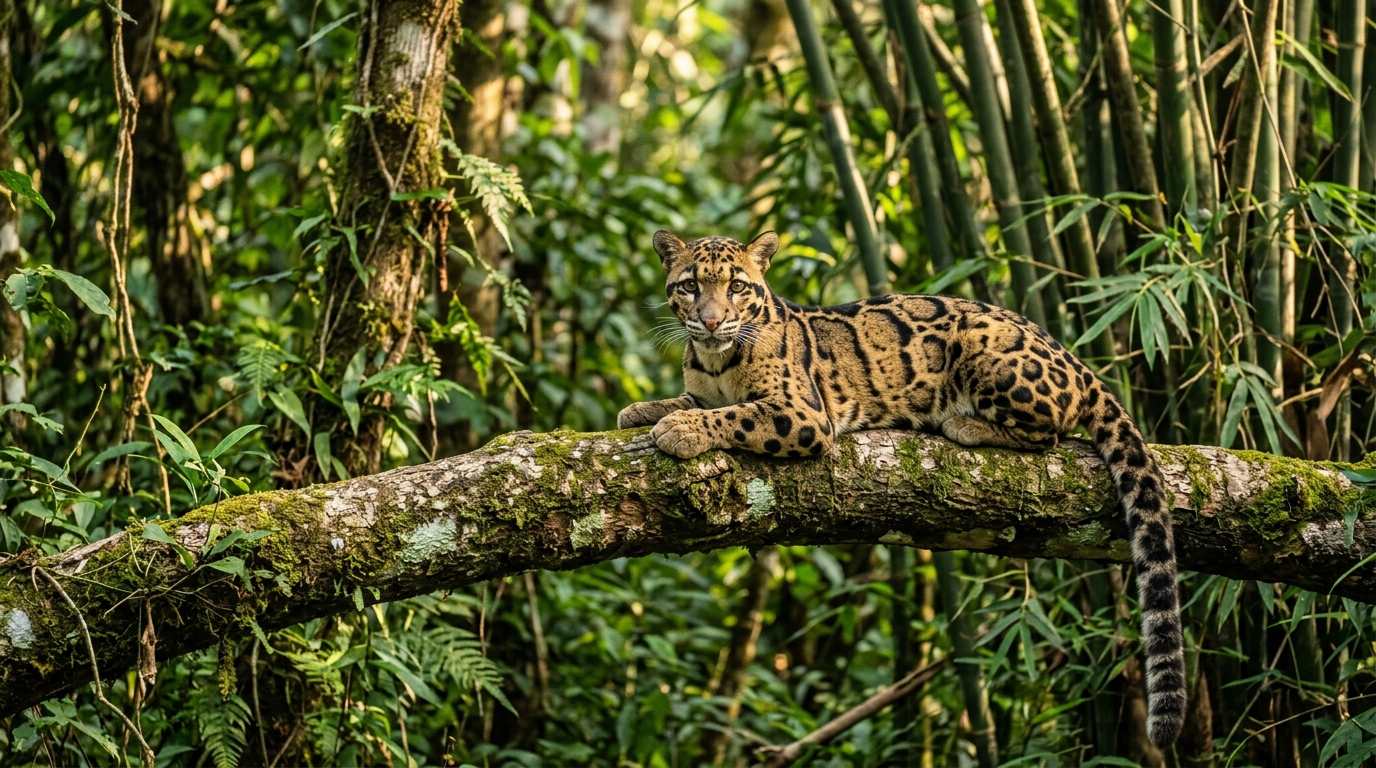
Dampa Tiger Reserve, in Mizoram's Mamit district on the state's western edge, is the largest protected area in Mizoram and one of Northeast India's most important tiger landscapes. It covers 988 sq km in total, made up of a 545 sq km core Critical Tiger Habitat and a 488 sq km buffer zone, after the core was expanded in 2018 to bring in the Serhmun village forest that had previously served as buffer. Dampa was brought under Project Tiger in 1994, formalising decades of earlier protection as a wildlife sanctuary. It sits along Mizoram's border with Bangladesh, and its terrain of steep hills, fast-flowing streams, and near-continuous forest cover has made it one of the least disturbed large forest blocks in the region. Lower elevations carry moist deciduous forest, giving way to tropical wet evergreen and semi-evergreen forest across most of the reserve. While Dampa is officially a tiger reserve, its standout wildlife distinction is arguably its clouded leopard population: camera-trap studies have recorded the highest density of clouded leopards found anywhere in India within Dampa's forests, a genuinely rare superlative for a species that is notoriously difficult to document. The reserve also supports leopard, Asian elephant, hoolock gibbon, and swamp deer, alongside a rich understorey and canopy fauna typical of relatively undisturbed evergreen forest. Dampa remains comparatively little-visited next to central Indian tiger reserves, both because of its remote western-Mizoram location and because sighting probabilities for its resident tigers are lower than in more open, grassland-heavy reserves elsewhere in India. For visitors and researchers focused on Northeast India's rainforest carnivores specifically, though, Dampa's clouded leopard density makes it one of the most scientifically significant reserves in the region.

Mamit
Safari & EcotourismView Sanctuary →
Dibru-Saikhowa National ParkNovember to April (migratory bird season; the park is largely inaccessible during the monsoon due to flooding)

Dibru-Saikhowa National Park

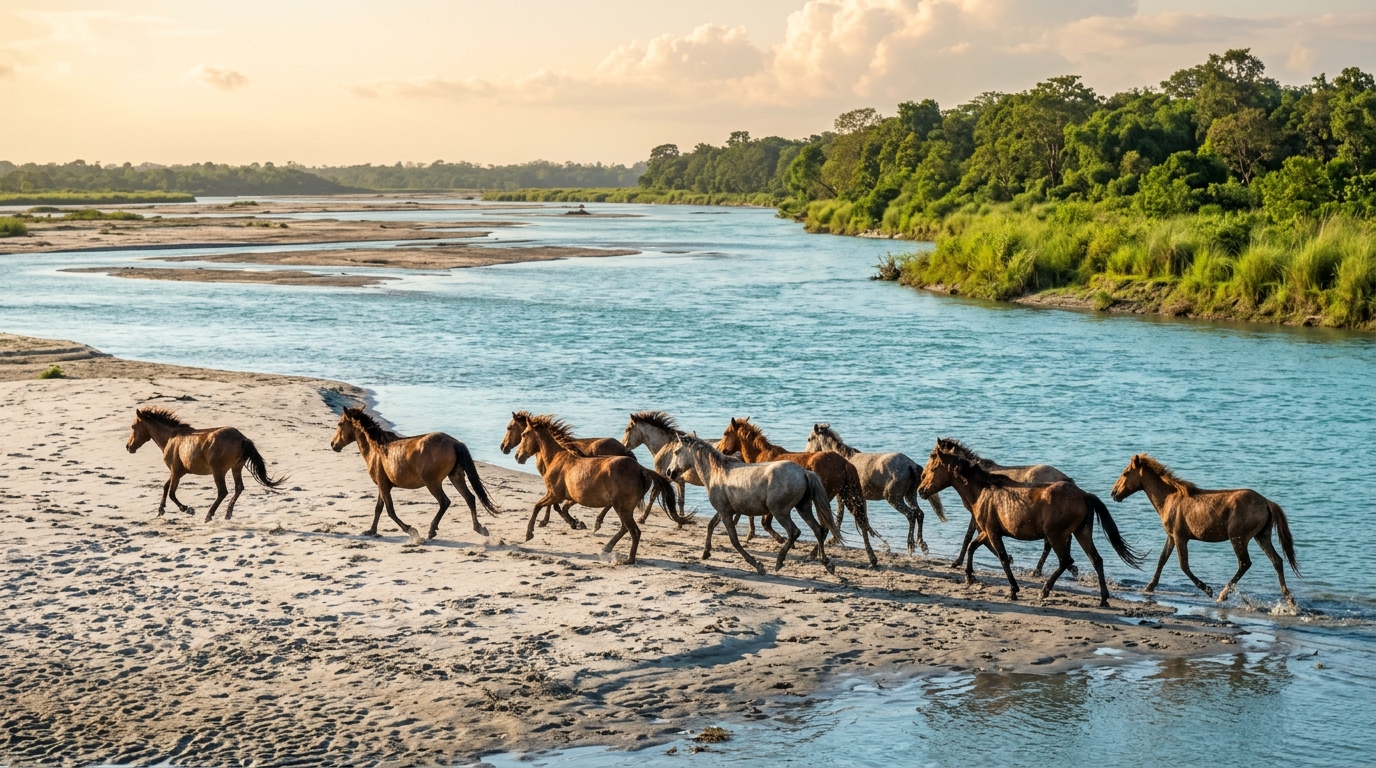
Dibru-Saikhowa National Park sits in the floodplains of the Brahmaputra and Dibru rivers in Assam's Dibrugarh and Tinsukia districts, about 12 km north of Tinsukia town. Spanning roughly 340-425 sq km depending on the boundary survey cited, it is recognised as one of the world's significant biodiversity hotspots and was declared a UNESCO-designated Biosphere Reserve, one of the largest riverine biosphere reserves in India. The park was originally notified to protect the white-winged wood duck (Asarcornis scutulata), a globally endangered species that finds sanctuary in its swamps and semi-evergreen forest patches. Just as distinctive are its feral horses, a population of roughly 50 animals concentrated around the Churkey Chapori grasslands in the park's north, popularly believed to descend from army horses that escaped or were released during World War II supply operations through the region. Surveys have recorded 36 mammal species, 502 bird species, 104 fish species, 43 reptile species, 105 butterfly species, and around 680 plant species within the park. Primates include the Assamese macaque, rhesus macaque, and slow loris. The wetlands, particularly the adjoining Maguri-Motapung Beel, are a major wintering ground for migratory waterfowl, drawing birdwatchers alongside conservation researchers each cold season. Habitat here is unusually varied for a single protected area: tropical moist deciduous forest, tropical semi-evergreen forest, Salix swamp forest, moist evergreen patches, riverine grassland, and canebrake, shaped by the constantly shifting channels of the Brahmaputra and Dibru. Access is predominantly by country boat rather than jeep, since much of the park is riverine island and wetland terrain, giving a visit here a markedly different character from Assam's better-known dry-land parks like Kaziranga or Manas.

Tinsukia
Safari & EcotourismView Sanctuary →
Eaglenest Wildlife SanctuaryNovember to April (dry season; peak birding March-April)

Eaglenest Wildlife Sanctuary

Eaglenest Wildlife Sanctuary, in Arunachal Pradesh's West Kameng district, covers 217 sq km and is widely regarded as one of the finest birdwatching destinations anywhere in Asia. Its reputation rests on more than 450 recorded bird species packed into a compact area spanning a dramatic elevational gradient, from subtropical forest in the lower reaches up through temperate broadleaf forest to high-altitude rhododendron and conifer forest near the Eaglenest Pass. The sanctuary's single most famous resident is the Bugun liocichla, a strikingly coloured babbler that was entirely unknown to science until its discovery here in 1995 and formally described only in 2006, one of the very few bird species discovered in India in the past century. It was named after the local Bugun tribe, whose community forest borders the sanctuary and whose cooperation has been central to the bird's ongoing protection, since much of its known range sits just outside the sanctuary's formal boundary. Beyond the liocichla, Eaglenest draws specialist birders for species such as Ward's trogon, the beautiful nuthatch, rufous-necked hornbill, multiple trogopan and wren-babbler species, and dozens of warbler, laughingthrush, and flycatcher species that are difficult or impossible to see reliably anywhere else. The sanctuary's elevational range also supports red panda and a range of other Eastern Himalayan mammals, though its global reputation is overwhelmingly built on birdlife rather than large mammals. Eaglenest is typically visited as part of a dedicated birding itinerary along the Eaglenest-Lama Camp-Bompu-Sessni road corridor, often combined with a trip to nearby Pakke Tiger Reserve or the town of Dirang. For serious birders, it ranks among the top destinations in India, and its conservation model, built on partnership with the Bugun community rather than exclusion, is frequently cited alongside Pakke's hornbill programme as an example of how Arunachal Pradesh's indigenous communities have become central to the state's conservation successes.

West Kameng
Safari & EcotourismView Sanctuary →
Hoollongapar Gibbon SanctuaryNovember to March (cooler, drier months; gibbon calls are most active in early morning)

Hoollongapar Gibbon Sanctuary

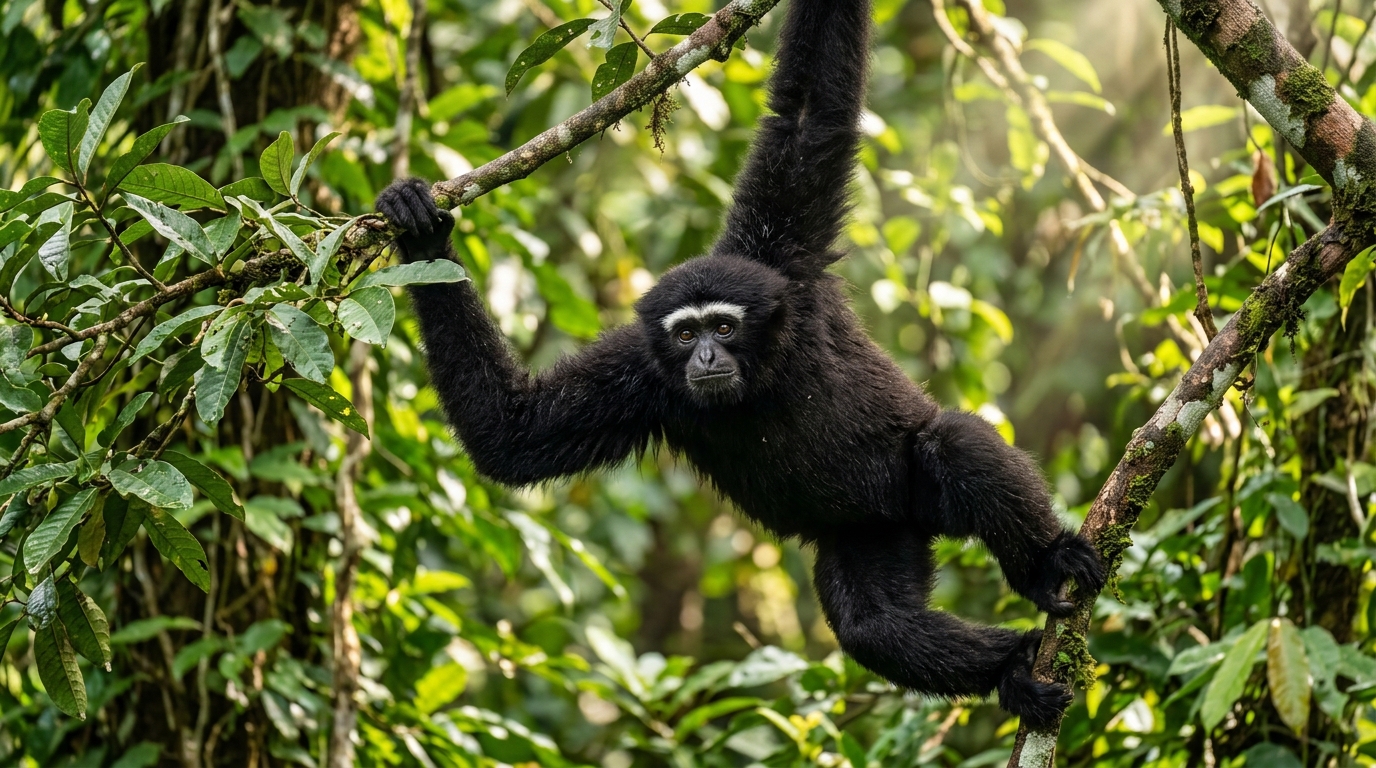
Hoollongapar Gibbon Sanctuary, about 19 km from Jorhat town in upper Assam, is the only protected area in India where the western hoolock gibbon and the Bengal slow loris can both be reliably spotted. Covering roughly 21 sq km, the sanctuary was declared in 1997, building on forest that had already been reserved decades earlier; it was previously known simply as Gibbon Wildlife Sanctuary before being renamed to reflect its signature species. The western hoolock gibbon is India's only ape species, and Hoollongapar holds one of the country's most accessible viewing populations, moving through the tall evergreen canopy in family groups and announcing themselves with loud, distinctive morning calls that carry across the forest. Sharing the same canopy is the nocturnal, slow-moving Bengal slow loris, a species far harder to see on a daytime visit but present in meaningful numbers within the sanctuary's core. Beyond the two headline primates, Hoollongapar supports stump-tailed macaque, eastern Assamese macaque, and capped langur, giving it one of the densest primate assemblages of any protected area in Northeast India. Larger mammals including tigers, jungle cats, Indian elephants, and wild boar also use the sanctuary, alongside a range of squirrel and civet species. The forest itself is a distinctive, tightly layered evergreen habitat: Hollong trees dominate the upper canopy, Nahar the middle layer, with evergreen shrubs and herbs forming the understorey. Because the sanctuary is a relatively small, isolated forest patch surrounded by tea estates and agricultural land, it is also an important case study in fragmented-habitat primate conservation, where the long-term survival of the gibbon population depends on maintaining canopy connectivity within a shrinking forest island.

Jorhat
Safari & EcotourismView Sanctuary →
Intanki National ParkNovember to April (dry season)

Intanki National Park

Intanki National Park (also spelled Ntangki in some official Nagaland Forest Department references) lies in the Peren district of Nagaland, about 37 km from Dimapur town, making it one of the more accessible protected areas in the state given Dimapur's air and rail connections to Guwahati, Kolkata, Bengaluru, and Delhi. Established in 1993, the park covers roughly 202 sq km of tropical and sub-tropical forest on Nagaland's border with Assam. The park's wildlife list punches well above its size: hoolock gibbon, golden langur, clouded leopard, Asian elephant, wild buffalo, tiger, and sloth bear have all been recorded, alongside wild dogs and a healthy population of palm civets and flying squirrels. Birdlife is similarly strong, headlined by the rare Blyth's tragopan, a striking high-value species for birders, alongside hornbills and the black stork. Reptiles include monitor lizard and python. Forest cover is dominated by commercially and ecologically significant species including mahogany, rattan, bamboo, and stands of Khasi pine and Caribbean pine, reflecting Intanki's transition-zone position between the Brahmaputra valley lowlands and Nagaland's hill forests. This mix of habitats is part of why the park supports both lowland species typical of Assam's parks and hill-forest species more associated with the wider Naga hills. Compared to Nagaland's better-known Hornbill Festival tourism circuit around Kohima, Intanki remains a genuinely under-visited wildlife destination, offering visitors a realistic chance to combine a Dimapur stopover with a forest excursion rather than requiring a dedicated multi-day wildlife trip. Its position on the Assam-Nagaland border also makes it ecologically important as a corridor linking lowland and hill-forest wildlife populations across the two states.

Peren
Safari & EcotourismView Sanctuary →
Keibul Lamjao National ParkNovember to March (migratory bird season; also the driest, most stable phumdi conditions)

Keibul Lamjao National Park

Keibul Lamjao National Park, on Manipur's Loktak Lake, is the only floating national park in the world, a distinction rooted in the physical structure of the land itself. Much of the park's roughly 40 sq km sits on phumdis, thick floating mats of vegetation, soil, and organic matter that have built up over decades on the surface of Loktak Lake, the largest freshwater lake in Northeast India. Visitors and wildlife alike move across a landscape that is, quite literally, floating. The park exists to protect the sangai, or brow-antlered deer, Manipur's state animal and often called the "dancing deer" for its distinctive high-stepping gait across the spongy phumdi surface. The sangai's population history is a genuine conservation-recovery story: numbers fell to just 14 animals in 1975, recovered to about 155 by 1995, and reached roughly 260 by the March 2016 census, making Keibul Lamjao one of the clearer examples in Northeast India of a single-species park successfully pulling a population back from the edge of local extinction. The sangai exists nowhere else in the wild. Beyond the sangai, the park supports hog deer and otters, and its wetland habitat makes it an important stopover and wintering ground for migratory waterfowl, with the heaviest bird activity typically between November and March. The phumdi ecosystem itself is ecologically unusual enough to be of independent scientific interest, quite apart from the wildlife it supports. Because standard jeep-safari infrastructure does not apply to a floating wetland park, visits here are typically made by boat from watchtowers and viewing platforms rather than vehicle tracks, giving Keibul Lamjao a visitor experience unlike any other protected area covered on this site. Its proximity to Loktak Lake's other well-known attraction, the floating Sendra/Loktak fishing villages, makes it a natural pairing for visitors already exploring the lake.

Bishnupur
Safari & EcotourismView Sanctuary →
Khangchendzonga National ParkMarch-May and October-December (trekking seasons; the high park is snowbound in winter)

Khangchendzonga National Park

Khangchendzonga National Park, in northern Sikkim near Yuksom, covers an enormous 1,784 sq km, roughly a quarter of the entire state of Sikkim, making it one of the largest and most ecologically significant protected areas anywhere in the Himalaya. In July 2016 it became India's first UNESCO Mixed World Heritage Site, a designation recognising both its outstanding natural biodiversity and its deep cultural and religious significance to Sikkim's Buddhist and Lepcha communities, for whom the surrounding landscape, and Mount Khangchendzonga itself, the world's third-highest peak, is held sacred. The park's terrain spans an extraordinary vertical range, from subtropical valley forest through temperate and alpine zones up to permanently glaciated high peaks, giving it one of the widest habitat gradients of any single protected area in India. That range supports 1,580 recorded vascular plant species, 124 mammal species, and around 300 bird species, an exceptional density of biodiversity concentrated within a relatively compact Himalayan footprint. Flagship mammals include the snow leopard, red panda, Himalayan blue sheep (bharal), and musk deer, all species associated with high-altitude Himalayan terrain rather than the lowland forests that dominate most of Northeast India's other protected areas. Birdlife includes several pheasant species prized by birders, the Himalayan monal, blood pheasant, grey peacock pheasant, and satyr tragopan, alongside high-altitude specialists like the black-necked crane and Tibetan snow cock. Most visitor access to the park is via the Yuksom trailhead, the starting point for the well-known Goecha La trek toward the Kangchenjunga base area, making Khangchendzonga far more a trekking and mountaineering destination than a jeep-safari park. Its combination of extreme biodiversity, sacred cultural status, and genuine high-Himalayan scale sets it apart from every other wildlife destination on this site.

North Sikkim
Safari & EcotourismView Sanctuary →
Laokhowa-Burhachapori Wildlife SanctuaryNovember to April (dry season; the sanctuary floods heavily during the monsoon)

Laokhowa-Burhachapori Wildlife Sanctuary

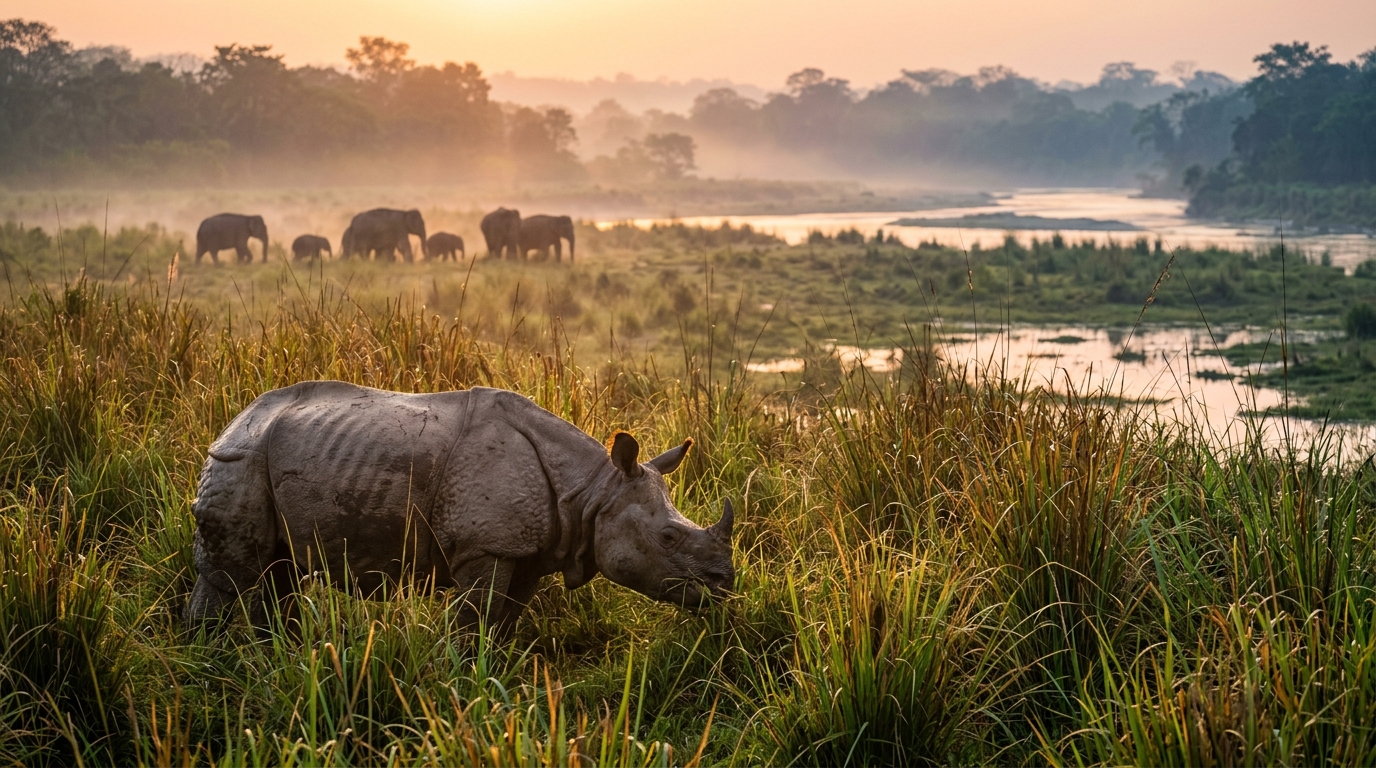
Laokhowa and Burhachapori are two adjoining wildlife sanctuaries on the southern bank of the Brahmaputra in Assam's Nagaon district, together forming a wildlife corridor between some of the state's most important protected areas: Kaziranga lies to the east, Orang and Pobitora to the west, Pakke-Nameri to the north, and the Karbi Anglong reserve forests to the south. Laokhowa alone covers about 70 sq km of riverine grassland and semi-evergreen forest, a landscape shaped by the Brahmaputra's shifting channels much like Kaziranga's. The sanctuary's most significant recent milestone is the natural return of the greater one-horned rhinoceros. Rhinos had been poached to local extinction here in the 1980s; in December 2023, two rhinos moved into the sanctuary of their own accord from neighbouring habitat, the first confirmed sighting of the species here in decades, and forest staff have monitored them closely since. Elephants, royal Bengal tigers, and Asiatic water buffalo also use the sanctuary, alongside barking deer, fishing cat, leopard cat, civet, and wild pig. Birdlife is a major draw: more than 225 species have been recorded, making the sanctuary an increasingly popular stop for birders visiting central Assam alongside Kaziranga. The wetlands and grasslands also support a breeding population of around 39 fish species, 9 amphibian species, and 14 reptile species, underlining how much of the sanctuary's ecological value sits below the waterline as well as above it. Because the rhino population here is newly re-established rather than long-standing, Laokhowa-Burhachapori offers a genuinely different visitor narrative from Assam's flagship parks: a conservation-recovery story still unfolding, rather than an already-stabilised population. Visitors interested in Assam's broader rhino-conservation landscape, not just Kaziranga's, will find this sanctuary a meaningful complement to a Kaziranga trip.

Nagaon
Safari & EcotourismView Sanctuary →
Murlen National ParkOctober to April (dry season; monsoon access is difficult given the remote hill terrain)

Murlen National Park

Murlen National Park sits in Mizoram's Champhai district, close to the Myanmar border and roughly 245 km east of the state capital Aizawl, in the Chin Hills borderland. Established in 1991, the park covers about 200 sq km of dense, largely undisturbed forest that has earned it the local nickname "Land of No Return," a reference to how thick the canopy is: very little sunlight reaches the forest floor, making it one of the most visually dramatic and ecologically intact forests in Mizoram. The park's wildlife list includes clouded leopard, Himalayan black bear, tiger, leopard, serow, sambar, barking deer, Malayan giant squirrel, and hoolock gibbon, an unusually complete assemblage for a park of its size, reflecting how little of Murlen's forest has been logged or fragmented. Birdlife is similarly rich, with more than 150 recorded species including the peregrine falcon and Blyth's tragopan, and rarer sightings of Hume's pheasant, white-naped yuhina, and dark-rumped swift, all species that draw specialist birders to the park despite its remote location. Flora is just as significant as the fauna: Murlen is home to over 400 species of medicinal plants used by surrounding Mizo communities, alongside oak, rhododendron, wild banana, and rare orchid species that flower seasonally through the park's mid-elevation forest. Murlen's remoteness, close to the international border and far from Aizawl's tourist infrastructure, has kept visitor numbers low, which is precisely why the forest has remained so intact. For travellers or researchers interested in the Indo-Myanmar biodiversity corridor specifically, rather than Mizoram's more accessible sites, Murlen offers one of the most complete forest ecosystems remaining anywhere in the state.

Champhai
Safari & EcotourismView Sanctuary →
Namdapha National ParkOctober to April (dry season; much of the interior is inaccessible during the monsoon)

Namdapha National Park

Namdapha National Park, in Arunachal Pradesh's Changlang district near the Myanmar border, is the largest protected area in Northeast India, covering roughly 1,985 sq km of forest that spans an extraordinary elevational range, from around 200 metres in the lowland valleys to over 4,500 metres in its high alpine reaches. That range gives Namdapha one of the widest habitat gradients of any national park in India, from tropical rainforest through temperate broadleaf and conifer forest to alpine meadow within a single protected boundary. Namdapha's single most remarkable distinction is that it is the only place on Earth confirmed to hold all four of the subcontinent's big cat species together: tiger, leopard, snow leopard, and clouded leopard all occur within the park's elevational range, a combination found nowhere else in the world. Camera-trap surveys have periodically confirmed tiger presence here, including a notable resighting after an eight-year gap without confirmed evidence, underlining both the park's conservation value and how difficult monitoring is across such vast, rugged, and remote terrain. Beyond the big cats, Namdapha supports red panda, hoolock gibbon, and a range of other primates and ungulates typical of the eastern Himalayan foothills, alongside exceptional plant diversity across its tropical-to-alpine gradient. The park's remoteness, limited road access, and lack of significant tourist infrastructure mean most of its interior remains genuinely wild and rarely surveyed, which is both a conservation strength and a research challenge. Because of its size, elevational range, and the sheer logistical difficulty of accessing its interior, Namdapha is best understood as one of Asia's great remaining wilderness areas rather than a conventional safari destination; visits typically involve multi-day trekking with local guides rather than jeep-based game drives, and sightings of the flagship big cats are rare even for dedicated wildlife researchers.

Changlang
Safari & EcotourismView Sanctuary →
Nokrek National ParkOctober to April (drier months; monsoon access to the ridge trails is difficult)

Nokrek National Park

Nokrek National Park sits atop the highest point of the Garo Hills in Meghalaya's West Garo Hills district, and is best known for two very different distinctions: it is a UNESCO-listed biosphere reserve (recognised in May 2009), and it is believed to hold the world's centre of origin for citrus. Citrus indica Tanaka, found growing wild within the park, is regarded by botanists as the likely ancestral species from which all cultivated citrus fruits ultimately descend, making Nokrek a site of genuine global botanical significance rather than just a regional one. The park's forest also shelters one of India's more unexpected wildlife populations: red pandas, normally associated with the high Himalaya, survive here at a latitude and elevation far outside their typical range, one of very few confirmed red panda populations anywhere in Northeast India outside Sikkim and Arunachal Pradesh. Asian elephants, hoolock gibbons, clouded leopards, and stump-tailed macaques share the same forest, and the park has recorded more than 200 bird species, making it a significant, if still under-visited, birding destination. Vegetation ranges from tropical semi-evergreen forest at lower elevations to subtropical broadleaf forest near the ridge line, with a rich understorey of wild citrus relatives, orchids, and medicinal plants that Garo communities have traditionally drawn on. The biosphere reserve designation covers not just the core national park but a wider buffer zone of community and reserved forest, reflecting an explicit conservation strategy built around involving surrounding Garo villages rather than excluding them. For visitors, Nokrek is usually approached from Tura, the West Garo Hills district headquarters, with the Tura Peak viewpoint and Nokrek Peak trek being the main access points into the reserve. Its combination of rare high-altitude wildlife, globally significant plant genetics, and relatively light tourist footfall makes it one of Meghalaya's more scientifically important, if lesser-known, protected areas.

West Garo Hills
Safari & EcotourismView Sanctuary →
Pakke Tiger ReserveNovember to April (dry season; hornbill breeding activity peaks January-April)

Pakke Tiger Reserve

Pakke Tiger Reserve, in Arunachal Pradesh's East Kameng district, covers 862 sq km of largely unbroken tropical and subtropical forest along the foothills of the eastern Himalaya. Beyond its status as a tiger reserve, Pakke has become nationally known as one of India's leading hornbill conservation sites, home to three species: the wreathed hornbill, the great hornbill, and the oriental pied hornbill, with wreathed hornbill recorded at the highest density of the three. Pakke's hornbill conservation work is built around its Hornbill Nest Adoption Programme, an initiative that pairs local Nyishi community members, many of them former hunters, with individual hornbill nest sites to monitor and protect them through the breeding season. The programme won the India Biodiversity Award in 2016 and is widely cited as a model for community-led conservation in Northeast India, turning traditional ecological knowledge into an active protection role rather than treating local communities as external to the reserve. The reserve's overall biodiversity is substantial for its size: more than 2,000 recorded plant species, around 300 bird species, 40 mammal species, 30 amphibian species, and 36 reptile species. Beyond the tiger and hornbills, the reserve supports elephant, leopard, clouded leopard, and a range of primates typical of the eastern Himalayan foothill forest. Pakke is one of the more accessible tiger reserves in Arunachal Pradesh, reachable from Seijosa town, and its combination of tiger-reserve status with a genuinely distinctive, community-driven hornbill programme makes it a strong pairing for visitors already travelling toward Arunachal's better-known Eaglenest and Namdapha wildlife circuits.

East Kameng
Safari & EcotourismView Sanctuary →
Sepahijala Wildlife SanctuaryOctober to March (cooler, drier months)

Sepahijala Wildlife Sanctuary

Sepahijala Wildlife Sanctuary, close to Agartala in Tripura's Sepahijala district, is a comparatively small but exceptionally dense protected area, covering roughly 18.5 sq km of moist deciduous forest since being declared protected in 1987. Within its boundary sits Clouded Leopard National Park, notified in 2007 and covering about 5 sq km, home to Tripura's well-known clouded leopard breeding and viewing enclosure alongside four species of primate including the Phayre's langur. Sepahijala's primate diversity is its standout feature: rhesus macaque, pig-tailed macaque, capped langur, spectacled monkey, and slow loris all inhabit the sanctuary's forest, making it one of the richest primate-viewing sites in Northeast India relative to its size. Alongside the primates, the sanctuary supports leopard, clouded leopard, jungle fowl, various civet species, barking deer, and wild pig, and hosts close to 150 recorded bird species. Botanically, Sepahijala is unusually diverse for its area, with 456 recorded plant species including numerous bamboo varieties, grasses, and medicinal plants, a density that reflects both the sanctuary's location in a high-rainfall zone and decades of protection from logging. Sepahijala's proximity to Agartala, Tripura's capital and main air gateway, makes it by far the most accessible wildlife destination in the state, typically visited as a half-day trip alongside the nearby Neermahal palace and Rudrasagar Lake. Its combination of an easy day-trip location, a dedicated clouded leopard facility, and genuinely high primate diversity makes it a natural first stop for visitors exploring Tripura's wildlife before heading to the more remote Trishna or Gumti sanctuaries.

Sepahijala
Safari & EcotourismView Sanctuary →
Trishna Wildlife SanctuaryOctober to March (cooler, drier months)

Trishna Wildlife Sanctuary

Trishna Wildlife Sanctuary, in South Tripura district, was declared a protected area in 1988 and covers about 195 sq km, making it one of the larger sanctuaries in a state where most protected areas are relatively small. It was established specifically to conserve the gaur, the Indian bison, which remains the sanctuary's flagship species and a significant part of why it draws specialist wildlife visitors rather than general tourists. Trishna's forest is unusually varied for its size, spanning four distinct forest types: tropical semi-evergreen forest, east Himalayan lower Bhabar sal forest, moist mixed deciduous forest, and patches of savannah woodland. That range supports a correspondingly rich flora, with 230 recorded tree species, 110 shrub species, 150 climbers, and around 400 herb species. Alongside the gaur, the sanctuary is home to hoolock gibbon, golden langur, capped langur, spotted deer, and wild boar, along with several other primate species that benefit from the sanctuary's largely unbroken canopy. Birdlife includes the pheasant-tailed jacana, white-breasted kingfisher, black drongo, tailorbird, and jungle myna, while reptiles recorded here include pythons, turtles, and various lizard species. Trishna remains one of Tripura's less-visited sanctuaries relative to Sepahijala's easy Agartala day-trip access, largely because of its location further south and its comparative lack of a single headline attraction like Sepahijala's clouded leopard enclosure. For visitors specifically interested in gaur and Tripura's broader primate diversity, though, Trishna's larger, more varied forest habitat offers a genuinely different, quieter wildlife experience from the state's more popular sites.

South Tripura
Safari & EcotourismView Sanctuary →